The one pest you can't ignore
If you remember a single name from this page, make it varroa. Varroa destructor is a tiny reddish-brown mite, about the size of a pinhead, that rides on bees and breeds inside the cells where baby bees grow. On its own it weakens bees; worse, it spreads viruses, including one that leaves bees with crumpled, useless wings.
Varroa jumped from Asian honey bees to western honey bees last century and has since spread almost everywhere. It was found in the United States in 1987 and in Britain in 1992. Today, nearly every beekeeper in those places has it. An untreated colony usually collapses within a few years, which is why "do I need to deal with mites?" has one answer: yes.
Checking for mites
- Sticky board. Slide a board under a mesh floor for a few days, then count the fallen mites.
- Sugar roll. Scoop about half a cup of bees into a jar, shake with powdered sugar, and count the mites that fall out. The bees walk away dusty but fine.
- Alcohol wash. The most accurate count, but it kills the sample bees. Many beekeepers think it's a fair trade for saving the colony.
Your local club or national bee unit will tell you what count means "time to act" for your area and season.
"Most new beekeepers don't lose bees to stings or swarms. They lose them to mites they never counted."
Our notebook, after a bad winter
Treating, in plain terms
There are approved treatments based on natural acids such as oxalic acid and formic acid, plant oils like thymol, and some synthetic products. Timing matters a lot. Oxalic acid, for example, works best in winter when there's little or no brood, because mites hiding in capped cells are protected. Always follow the label and your local rules; using unapproved stuff can harm bees and contaminate honey. Some beekeepers also use tricks like removing drone brood, which mites love, but that usually isn't enough alone.
The other troublemakers
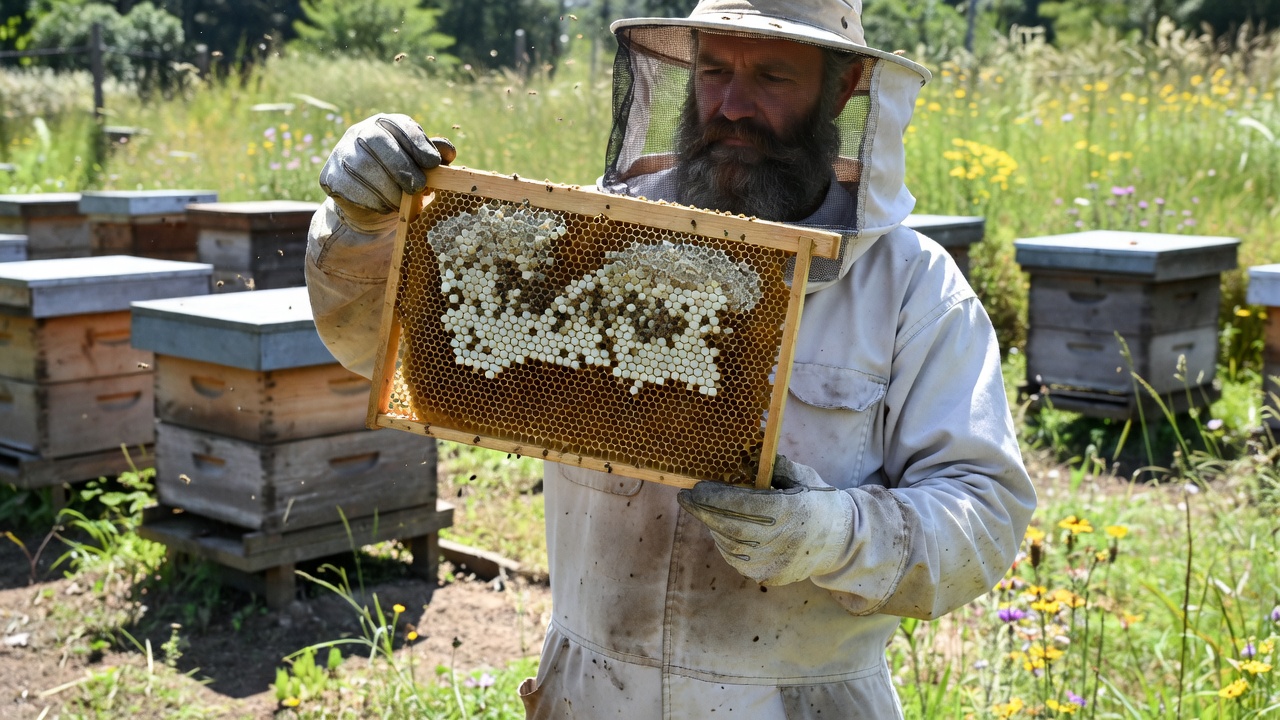
- American foulbrood. A serious bacterial disease that turns larvae into brown goo with a nasty smell. In the UK it's a notifiable disease, meaning you must report it, and the National Bee Unit runs a free register called BeeBase where you can sign up for alerts and inspections.
- European foulbrood. A related but different infection. Also notifiable in the UK.
- Small hive beetle. Aethina tumida, a problem in warm regions like the southern US. Larvae tunnel through comb and spoil honey.
- Asian hornet. Vespa velutina hunts honey bees and has spread across much of Europe. Sightings are often reportable, so check what your country asks for.
- Wax moth. Mostly a problem in weak colonies or stored frames.
The bigger picture
Around 2006 and 2007, American beekeepers reported whole colonies vanishing, and the phrase "Colony Collapse Disorder" hit the news. Researchers now point to a mix of causes: mites and viruses, poor nutrition, pesticides and stress. The good news is the basics help with almost all of them. Keep colonies strong, count mites, give bees plenty of varied flowers, and don't move frames between hives if one looks sick. Groups like the Honey Bee Health Coalition publish free, practical guides, and World Bee Day each 20 May, set by the United Nations on the birthday of Slovenian beekeeper Anton Janša, is a good yearly nudge to brush up.