The box, in one sentence
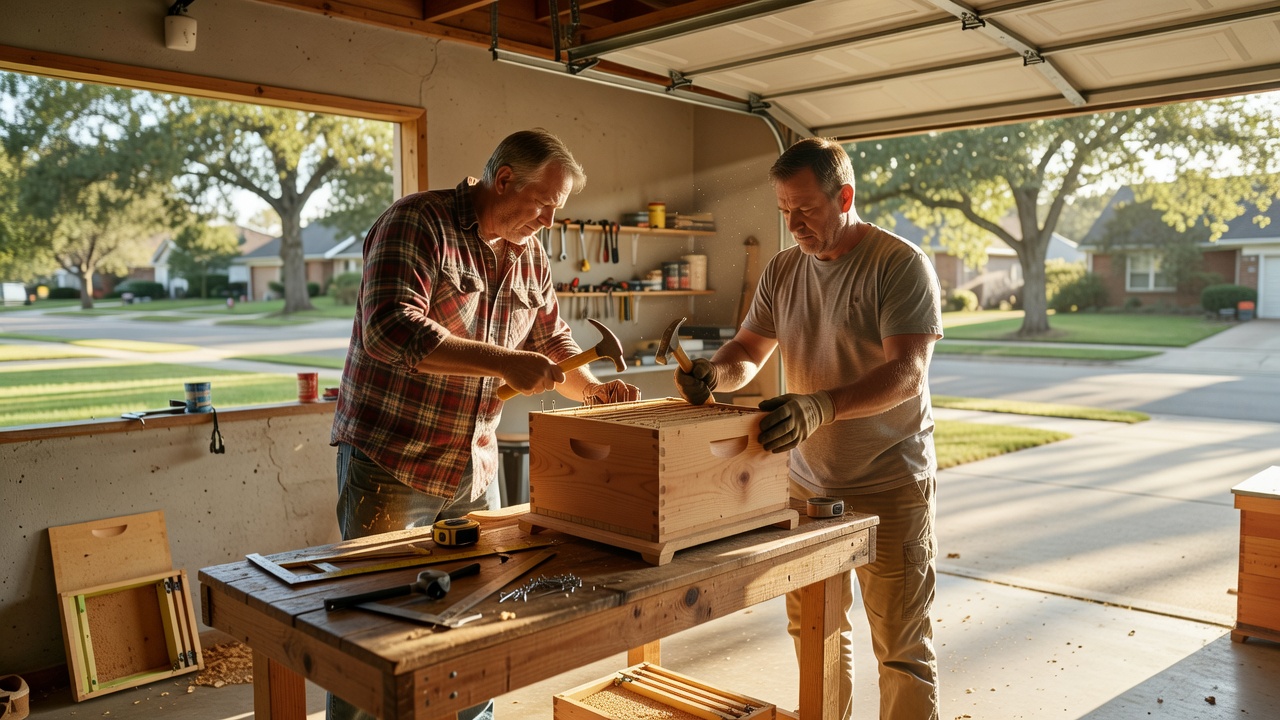
A modern beehive is a stack of wooden boxes with frames hanging inside, like files in a drawer. The bees build their wax comb on those frames, and because the frames lift out, you can check on the colony without wrecking anything.
That lift-out trick is surprisingly recent. In 1852 an American pastor called Lorenzo Langstroth patented a hive built around a gap he noticed bees leave alone: roughly 6 to 9 millimetres. Make the space smaller and bees glue it shut; make it bigger and they fill it with comb. Leave it just right and frames slide out cleanly. Beekeepers call that gap "bee space". You'll see the phrase everywhere, and now you know it just means "the gap bees don't mess with".
The three hive styles you'll hear about
- Langstroth. The stackable box most people picture. Huge choice of parts and the easiest to find help for. Sensible default for a first hive.
- National. The common British cousin of the Langstroth. Different measurements, same idea. In the UK, many clubs and suppliers use it, so parts are easy to get.
- Top-bar. One long trough with wooden bars across the top and no frames. Cheap, back-friendly because you don't lift heavy boxes, but you'll find fewer people who know it well.
- Warré. Designed by the French priest Abbé Émile Warré. Small boxes added underneath rather than on top, meant to feel more like a hollow tree. Lovely, a bit more hands-off, harder to inspect.
"Buy the hive your local club uses. Borrowed parts beat perfect theory."
Lesson learned the expensive way
What goes inside the stack
From the ground up: a stand, a floor with an entrance, one or two big boxes where the queen lays eggs and the young bees grow, then shallower boxes on top where the bees store spare honey. A flat sheet called a queen excluder often sits between them so the queen can't wander up and lay eggs in your honey. A lid finishes it off.
The gear you actually need
- A veil, at minimum. Face stings are the ones that make people quit. A full suit or a jacket with a hood is better for beginners.
- Gloves. Thick at first. Many people switch to thinner ones once they feel steadier.
- A hive tool. A small flat metal bar for prying apart boxes the bees have glued together with their sticky resin, called propolis.
- A smoker. A little can with bellows that puffs cool smoke. It masks the bees' alarm smell, so they stay calmer.
Everything else (fancy feeders, gadgets, branded hoodies) can wait until you know what you're missing.
Where to put the hive
Morning sun, a bit of shelter from wind, level ground, and an entrance that doesn't point at your neighbour's washing line or a footpath. A fence or hedge in front makes bees fly up and over people's heads. Water nearby helps too: bees drink a lot, and you'd rather they used your bird bath than next door's pool.
Before you spend anything
Join a local club or take a beginners' course over winter. The British Beekeepers Association and the American Beekeeping Federation both point to local groups, and many clubs let you try on a suit and open a hive with a mentor before you buy. Pair that with a solid book, such as The Beekeeper's Handbook by Diana Sammataro and Alphonse Avitabile, and you'll be ahead of most first-timers.